



Grub Worm Treatment Window in Illinois: Why Late June Decides Whether Your Lawn Survives August
Short Answer: Northern Illinois lawn grub damage that shows up in August and September comes from eggs that adult beetles laid in late June and early July. A preventive treatment applied in the last two weeks of June through the first week of July puts the product in the soil before eggs hatch, preventing almost all the damage. Curative treatments applied in August work on younger grubs but are partial fixes and cannot undo damage done. The late June window is the highest-leverage single lawn intervention of the summer in Illinois.
Every August in Northern Illinois we get the same call. Brown patches appearing in the lawn. Grass lifting in mats. Raccoons and skunks digging at the damaged areas. The cause is grubs, and the eggs that produced those grubs were laid by adult beetles 6 to 8 weeks earlier in late June and July. The damage was decided before it became visible.
This is one of the most preventable problems in Illinois residential lawn care. The fix is well-understood, the timing is predictable, and the cost is modest. We want to walk through why late June matters so much and what waiting costs.
The Lifecycle in Illinois
The grubs that damage Northern Illinois lawns are the larvae of several beetle species. Most common in our area are Japanese beetles, masked chafers (Northern and Southern), and May/June beetles. All follow similar lifecycles with slightly different exact timing.
Adult beetles emerge from the soil in late May through June. They feed on ornamental plants (Japanese beetles especially favor roses, linden trees, raspberries) and lay eggs in healthy irrigated turf. Egg-laying peaks in the last 10 days of June and the first week of July.
Eggs hatch into small white grubs 2 to 4 weeks after laying. The young grubs begin feeding on grass roots immediately. Through August and early September, grubs grow larger and feed more aggressively. Visible damage appears in mid August: yellowing patches, then brown patches, then grass lifting easily because roots have been eaten.
By late September the grubs are nearly mature and burrow deeper to overwinter. By October most are below the active feeding zone.
Why Late June Timing Wins
Preventive treatment applied in late June puts a granular insecticide in the soil where eggs are being laid. The product is present when eggs hatch and kills grubs at the smallest most vulnerable stage. Effectiveness is typically 90 to 95 percent.
Curative treatment applied in August works on grubs that have already hatched and are actively feeding. The grubs are larger, deeper in the soil, and have already done some damage. Effectiveness drops to 50 to 70 percent. Damage already done remains.
Product cost difference is small ($90 to $150 preventive vs $150 to $300 curative). Result difference is large. Damage cost difference is much larger when severe.
Risk Factors for Your Property
Several factors put a Northern Illinois lawn at higher risk.
History of grub damage. If your lawn had grub damage in any of the past 3 years, prevention is strongly recommended.
Healthy irrigated turf. Adult beetles prefer to lay eggs in lush moist soil where eggs survive best. The best-maintained lawns are often the highest-risk targets.
Neighborhood pressure. If multiple homes on your block had visible grub damage last year, the local adult beetle population is high.
Visible beetle activity. June bugs at porch lights, Japanese beetles on ornamentals, chafer clouds at dusk all indicate egg-laying generation present.
Newer subdivisions. New construction lawns with thin healthy irrigated turf are particularly attractive to egg-laying beetles.
What a Preventive Treatment Visit Looks Like
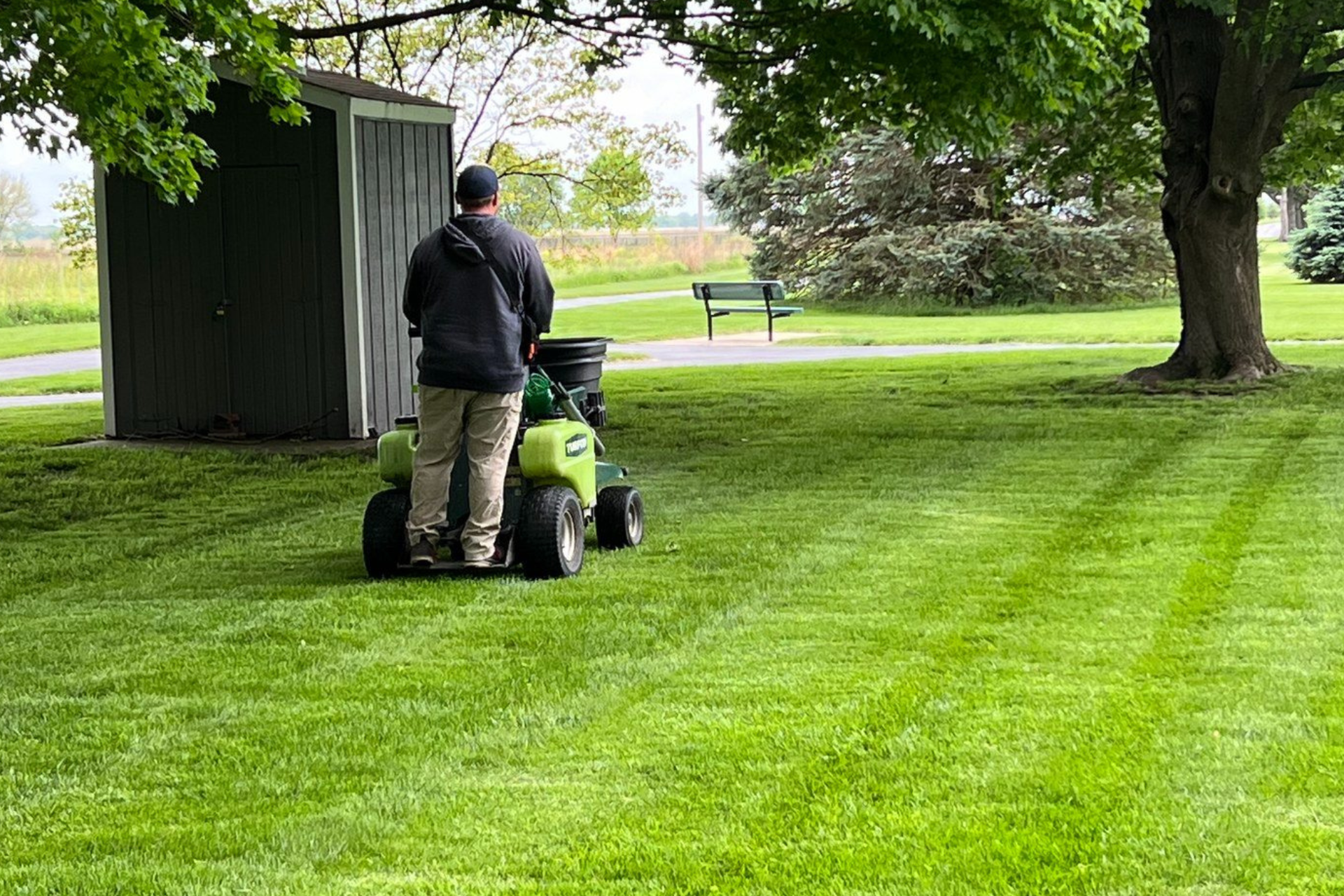
The visit takes 30 to 45 minutes for a typical residential lot. A granular preventive product is applied across the lawn at the labeled rate. The product gets watered in immediately to move it into the top 2 inches of soil where eggs are being laid.
The product residual carries through the egg-hatching window (about 8 to 12 weeks of active control). After that, it breaks down naturally.
The Cost Comparison
Preventive treatment for a typical Princeton or LaSalle area lot: $90 to $150 for a single application that handles the entire grub generation.
Curative treatment if you wait: $150 to $300 for a single application, often requiring follow-up 3 to 4 weeks later. Damage already done remains.
Replacement if damage is severe: $300 to $600 for small patches, $1,500 to $3,500 or more for substantial replacement. Plus the months of damaged lawn appearance.
What the Damage Actually Looks Like
For homeowners who have never seen grub damage and are not sure what to expect.
Early stage (late July): scattered yellowing patches that look like drought stress. Easy to misdiagnose.
Mid stage (August): brown patches that lift easily when tugged because roots are gone. Grass appears to roll up like loose carpet.
Late stage (late August and September): large connected damaged areas. Wildlife (raccoons, skunks, birds) actively digging in the lawn looking for grubs as food. Often the most visible sign before damage becomes obvious.
By the time wildlife damage is visible, the underlying grub population is already substantial. The lawn requires significant rescue intervention.
The Japanese Beetle Trap Question
Bag-type Japanese beetle traps actively make problems worse on most residential properties. The pheromone lure attracts beetles from up to 300 feet away. Many beetles land on your roses and ornamentals before ever reaching the trap. University extension entomologists have recommended against residential use for over a decade.
If you must use them, place at the back corner of the property far from plants you want to protect. Otherwise skip them.
Naturally-Based Alternatives
Some homeowners ask about organic or naturally-based grub control. Options are limited but real.
Beneficial nematodes. Microscopic parasitic worms that attack grubs. Effective when applied at the right soil temperature with adequate moisture. Often need to be repeated.
Milky spore. A bacterial disease specific to Japanese beetle grubs only (does not affect chafers or June bugs). Takes 2 to 3 years to build to effective levels.
For most properties these work as supplements to a preventive treatment rather than full replacements. We can discuss combinations during a property visit.
What If You Have Already Missed the Window
Mid to late July is still viable for late preventive treatment. After that you transition to curative treatments in August and September, which are partial fixes.
The window closes faster than most homeowners expect. We typically fill up by mid June each year because demand spikes during the active timing window.
What Customers Tell Us After Their First Successful June Treatment
For homeowners who get on the preventive program for the first time, the feedback pattern is consistent. August: no visible damage compared to neighboring lawns where grub damage is appearing. September: still no damage, lawn enters fall in good shape. October: customer compares notes with neighbors who skipped prevention and realize the cost-benefit math heavily favored their decision. Year 2: customer signs up earlier in spring to lock in the preventive timing. The pattern repeats across seasons.
Soil Health and Grub Risk
Beyond preventive treatment, soil health affects grub damage outcomes. Lawns with deep root systems recover from limited grub feeding better than lawns with shallow roots. Lawns with strong overall health show grub damage at higher population thresholds than stressed lawns. Long-term investment in soil health (aeration, organic matter, proper fertility) compounds with preventive grub treatment to produce dramatically better outcomes than either alone.
Frequently Asked Questions
How do I know if I had grub damage last year?
Signs include large brown patches in late summer that lifted like loose carpet, wildlife (raccoons, skunks, birds) digging in the lawn, or grass that did not recover with normal care.
Can I do this myself?
Yes. Granular preventive grub products are sold at home improvement stores. Correct timing (late June, not earlier or later), correct rate, and immediate watering are the keys. DIY cost is about $50 in product on a typical lot.
How long does the protection last?
A single preventive application protects through 8 to 12 weeks, which covers the entire egg-hatching and early grub-feeding window.
Is grub damage worse on certain grass types?
Cool-season lawns (Kentucky bluegrass, fescue, ryegrass) are most susceptible because they are the lawns most likely to be irrigated and attractive to egg-laying females. All cool-season grass species can suffer significant damage.
What to Do Next
If you have not yet scheduled preventive grub treatment, the next 7 to 14 days is the right window. We typically fill up by mid June.
Call us at 815-875-8231 or visit taylorsway.com. We serve Princeton, Spring Valley, Peru, Oglesby, LaSalle, and surrounding Northern Illinois communities.