
Fall Renovation Planning for Northern Illinois Lawns: Why July Decisions Decide Whether September Aeration Pays Off
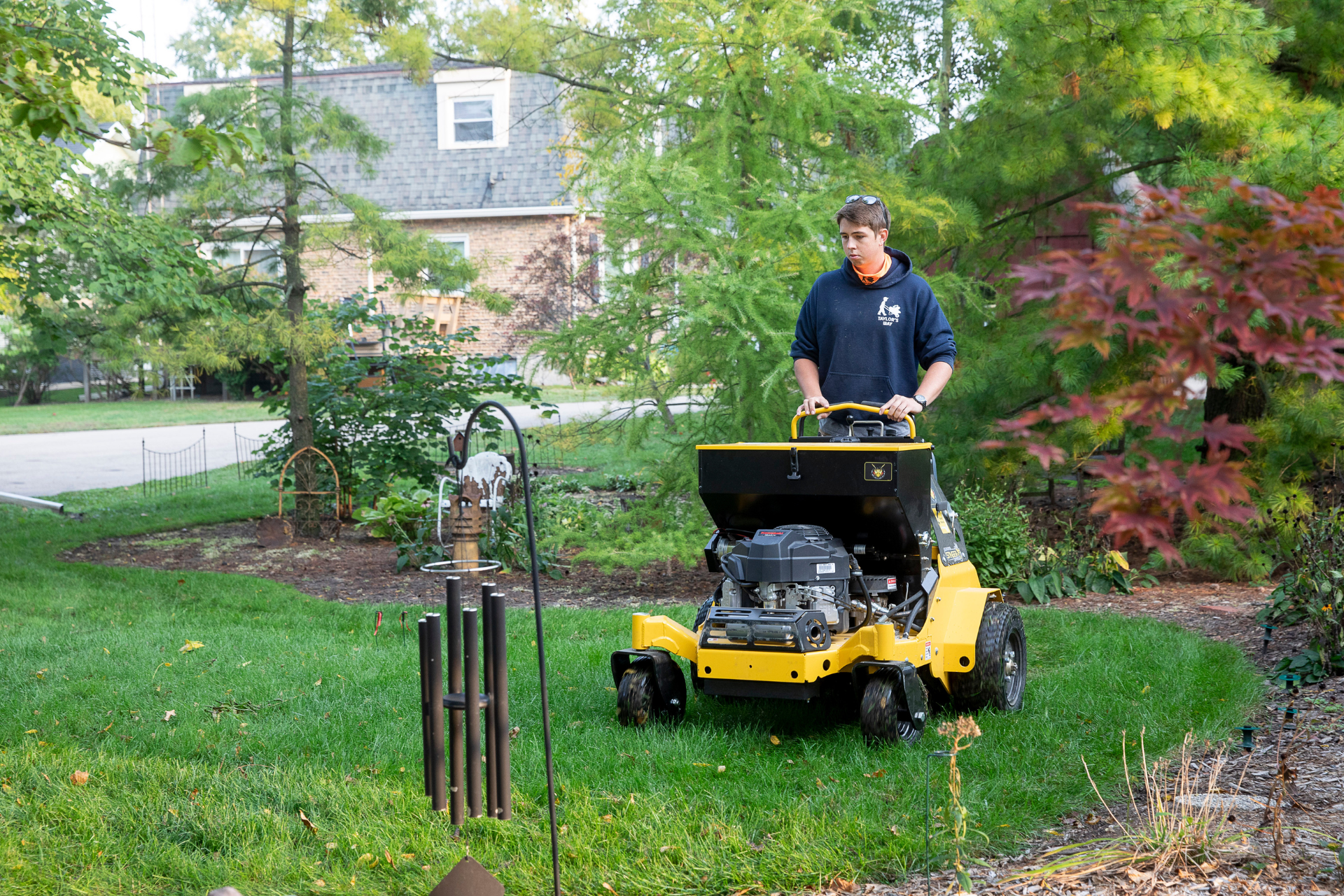
Short Answer: Fall is the high-leverage window for cool-season lawn work in Northern Illinois. Soil temperatures drop, seed germinates fast, and weed pressure backs off. But the homeowner who waits until September to start thinking about it almost always gets the wrong service, gets it on the wrong week, or finds the right service already booked solid. The renovation conversation needs to start in July. We walk the lawn, decide between overseed, slit-seed, or full renovation, set the calendar, and order seed before the August rush. Lawns booked in July out-perform lawns scheduled in late August by a wide margin.
Every September we get calls from homeowners who walked the lawn over Labor Day weekend, decided it needed work, and want it done before the kids go back. By the time the call comes in, the best two-week window for cool-season seeding is already half spent. The right seed is back-ordered. The aeration schedule is full. The lawn that could have been fully renovated in time for a strong fall recovery now gets a partial service or has to wait until next year.
This pattern is preventable. The renovation conversation belongs in July, not in September. The walk we do in July decides what the lawn needs, what the right service is, when it should be booked, and what materials need to be on hand. The September service is just execution of a plan that should already be in writing by the end of this month. We have run this calendar across hundreds of Princeton, Spring Valley, Peru, Oglesby, and LaSalle properties over five decades and the pattern is consistent: lawns whose owners planned in July look meaningfully better in October than lawns whose owners scrambled in September.
Why Fall Beats Spring for Cool-Season Renovation
Before we talk about the July walk, it is worth being clear on why fall is the right window in the first place. Cool-season grasses, the Kentucky bluegrass, fescue, and perennial ryegrass that dominate Northern Illinois lawns, want to grow when soil temperatures are between 50 and 65 degrees and air temperatures are mild. That window opens in late August, peaks through September, and runs into mid October. Seed germinates in seven to fourteen days at those soil temperatures. Roots establish before frost. Crabgrass and other summer weeds finish their cycle and stop competing with new seedlings. The young grass goes into winter with enough mass to come out strong in spring.
Spring renovation is the other option and the one most homeowners default to because it feels like the natural time to fix the lawn. Spring works for some situations but it has three big strikes against it. Crabgrass germinates at the same soil temperatures that cool-season seed needs, so new grass and weed pressure show up together. Summer arrives before the seedlings have built deep roots, so young plants face heat stress with shallow systems. And the spring window is short. The fall window in Northern Illinois is about six weeks long. The spring window is more like three.
For lawns that need real work, fall is not just the better window. It is usually the only window that produces a long-term result.
The Three Renovation Levels and What Each Costs
The July walk decides which level of work the lawn needs. There are three honest options and each has a clear set of indicators.
Overseed is the lightest service. We core-aerate, drop new seed at three to four pounds per thousand square feet, water it in, and let the existing turf carry most of the lawn. Overseed is the right service when the existing canopy is at least 70 percent intact and the issue is gradual thinning rather than dead patches. Typical cost for a residential lot runs in the range of three hundred to five hundred dollars depending on size.
Slit-seed is the middle service. The slit-seeder cuts narrow grooves into the soil and drops seed directly into them, which gives much better seed-to-soil contact than broadcast spreading. Slit-seed is right when the canopy is 40 to 70 percent intact and the lawn has real bare areas but the existing turf is still worth saving. Cost typically runs five hundred to nine hundred dollars for a residential lot. Recovery is faster and more uniform than overseed.
Full renovation is the heaviest service. We kill the existing lawn with a non-selective herbicide, wait for translocation, scalp the dead material, aerate, slit-seed, and topdress. Full renovation is the right service when the canopy is under 40 percent, the existing grass is mostly weeds, or the lawn has chronic problems that overseeding cannot fix. Cost runs nine hundred to two thousand dollars for most residential lots. The result is essentially a new lawn ready for spring.
The wrong service costs both ways. Overseeding a lawn that needed full renovation produces a thin first year that disappoints the homeowner and wastes the seed budget. Renovating a lawn that only needed overseed spends money on work that was not required. The July walk is what gets the service level right.
The Seven Checks We Run on a July Walk
When we walk a property for fall renovation planning, the diagnosis comes from seven checks. A homeowner can run the same seven on their own lawn.
First, canopy density. Walk the lawn at a slow pace and look at how much soil is visible between the grass blades. Less than 10 percent bare soil is a candidate for light overseed or no service. 10 to 30 percent points to overseed. 30 to 60 percent points to slit-seed. Over 60 percent bare or weedy points to full renovation.
Second, weed percentage. Estimate what fraction of the canopy is desirable grass versus crabgrass, dandelions, plantain, clover, and other invaders. A lawn that is more than 40 percent weeds will not respond well to overseed because the weeds will outcompete the new seedlings. That is the threshold for moving to slit-seed plus pre-renovation weed control, or to full renovation.
Third, soil compaction. Stick a long screwdriver into the soil in a few spots. If it goes in five to six inches with light pressure, compaction is not the limiting factor. If it stops at two or three inches, you have compaction and core aeration becomes essential regardless of which seeding service you pick.
Fourth, thatch depth. Pull a plug or use a knife to cut a small wedge out of the lawn. Look at the brown spongy layer between the green canopy and the soil. Anything over half an inch is interfering with water, air, and nutrient movement. Core aeration helps. Thicker thatch may need verticutting before seeding.
Fifth, grade and drainage. Walk the lawn after a rain and note where water pools or runs off too fast. Renovation is a chance to address grade issues that have been compromising the lawn for years. Adding fill and reshaping low spots is much easier when the lawn is being redone anyway.
Sixth, irrigation coverage. Run the system through one cycle and watch each zone. Coverage gaps you fix in July translate into uniform new lawn establishment in September. Coverage gaps you ignore translate into uneven germination patterns that show in October.
Seventh, sun and shade. The grass varieties you seed matter and the mix changes with exposure. Heavy shade calls for fine fescue heavy mixes. Sunny lawns do well with Kentucky bluegrass plus a fast-establishing ryegrass component. Renovation is a chance to match the seed to the conditions instead of fighting the lawn the original installer specified.
The July Calendar That Sets Up September Success
Once the diagnosis is settled, the rest of July and August have a clear job list. We work through this calendar with homeowners who are doing renovation themselves and on every property we manage.
First half of July: complete the diagnostic walk and decide the service level. Order seed if you are doing the work yourself. Book the contractor if you are not. The good aeration and slit-seeding services in Bureau, LaSalle, and Putnam Counties fill up by early August. Waiting costs you the calendar.
Second half of July: address weed pressure if the lawn has heavy weeds. A summer broadleaf application now produces clean ground for September seeding. For lawns going to full renovation, this is also when we apply the non-selective vegetation kill so the lawn can be scalped and prepped through August.
First half of August: continue watering existing turf at maintenance level so the soil structure does not deteriorate. Pick up any irrigation parts or hardware needed for installation. For full renovation lawns, complete the scalp and prep work so the seedbed is ready by mid month.
Second half of August: prepare seedbed. Light vertical mowing or dethatching for slit-seed and full renovation jobs. Topdressing of compost or sand where soil structure needs help. Final mowing of existing turf at the lowest height the mower allows two days before aeration.
Labor Day weekend through mid September: execute the service. Core aerate, slit-seed or broadcast seed depending on the plan, topdress, and water. Daily light watering through germination, then transition to the deeper less-frequent schedule once seedlings are established.
Mid September through mid October: starter fertilizer at two to three weeks. First mow when new grass reaches three inches. Continue light watering through establishment. Final mow of the season around mid October with the deck raised.
What Renovation Looks Like a Year Later
For lawns where the July plan gets followed and the September service executes well, the year-one outcome is consistent. October of the install year: visible uniform new turf at two to three inches with a few thin spots in the worst original areas. Spring of year one: green-up is earlier and more uniform than the previous spring because the seedling crowns survived winter and the soil was prepped. Summer of year one: better heat tolerance because the new root systems established through fall. By the second fall after the renovation, most lawns are essentially indistinguishable from a lawn that has been well-managed for years.
The lawns that do not look like this a year later are almost always lawns where one of three things went wrong: the wrong service level was chosen, the calendar slipped past the optimal window, or the post-install watering schedule was not followed. All three are preventable in the July walk.
Frequently Asked Questions
Can I just keep doing overseed every year instead of full renovation?
For a lawn at 70 percent canopy or better, yes. Annual or biennial overseed is the right maintenance pattern. For a lawn below 50 percent canopy, the math stops working. You will spend overseed money for years and never get past the underlying issues. Full renovation once produces a result that overseeding ten times will not match.
How much does the right seed matter?
A great deal. Northern Illinois lawns need cool-season mixes adapted to our climate and soil. Cheap big-box seed often includes annual ryegrass, which germinates fast and then dies, or generic fescues that do not handle our winters well. The seed line item is rarely the place to save money on a renovation.
Will my fall renovation kill my mature trees or shrubs?
No. Core aeration helps tree roots more than it harms them. Slit-seeding can be done around tree drip lines without compromising the trees. Full renovation with a non-selective herbicide does require careful application to avoid root uptake by trees, which is one of the reasons professional service is worth considering on properties with mature plantings.
Is fall renovation worth the cost on a small lawn?
The math is actually better on smaller lawns because the fixed costs of mobilization and equipment spread across less square footage. On a small front yard, a slit-seed and aerate package can produce a dramatic transformation for under five hundred dollars.
What if drought stress or grub damage shows up in August on a lawn I was planning to overseed?
That is exactly why the July plan includes a check-in in early August. If the lawn condition deteriorates between July and renovation week, the service level can be upgraded. The reverse is rarely possible. A lawn booked for overseed and then needing full renovation can usually be accommodated. A lawn booked for full renovation that ends up only needing overseed has been overspent.
The Taylor’s Way Renovation Walk
For homeowners across north-central Illinois, we offer a fall renovation planning walk in July. We come out, we run the seven checks, we tell you which service level fits the lawn, we set the calendar, and we give you a written quote. If you want us to execute the work, we book the date right then. If you want to do it yourself, you leave with a written plan you can run on your own. Either way, the July walk gives you the time you need to make the September service produce a real result.
Our family has been planning fall renovations for Northern Illinois homeowners for over fifty years. The window has not moved, the biology has not changed, and the right calendar has not changed. What changes is whether homeowners commit to the plan in time to execute it well.
What to Do Next
If you want a fall renovation plan for your specific lawn, call Taylor’s Way at 815-875-8231 or visit taylorsway.com. We serve Princeton, Spring Valley, Peru, Oglesby, LaSalle, and surrounding Northern Illinois communities. We will walk the lawn this month, recommend the right service level, set the September date on the calendar, and tell you straight what your lawn needs to come into next spring looking the way you want it to look.