
Tree Pest Watch for Illinois Properties in July: Japanese Beetles, Bagworms, and Tree Disease Signs
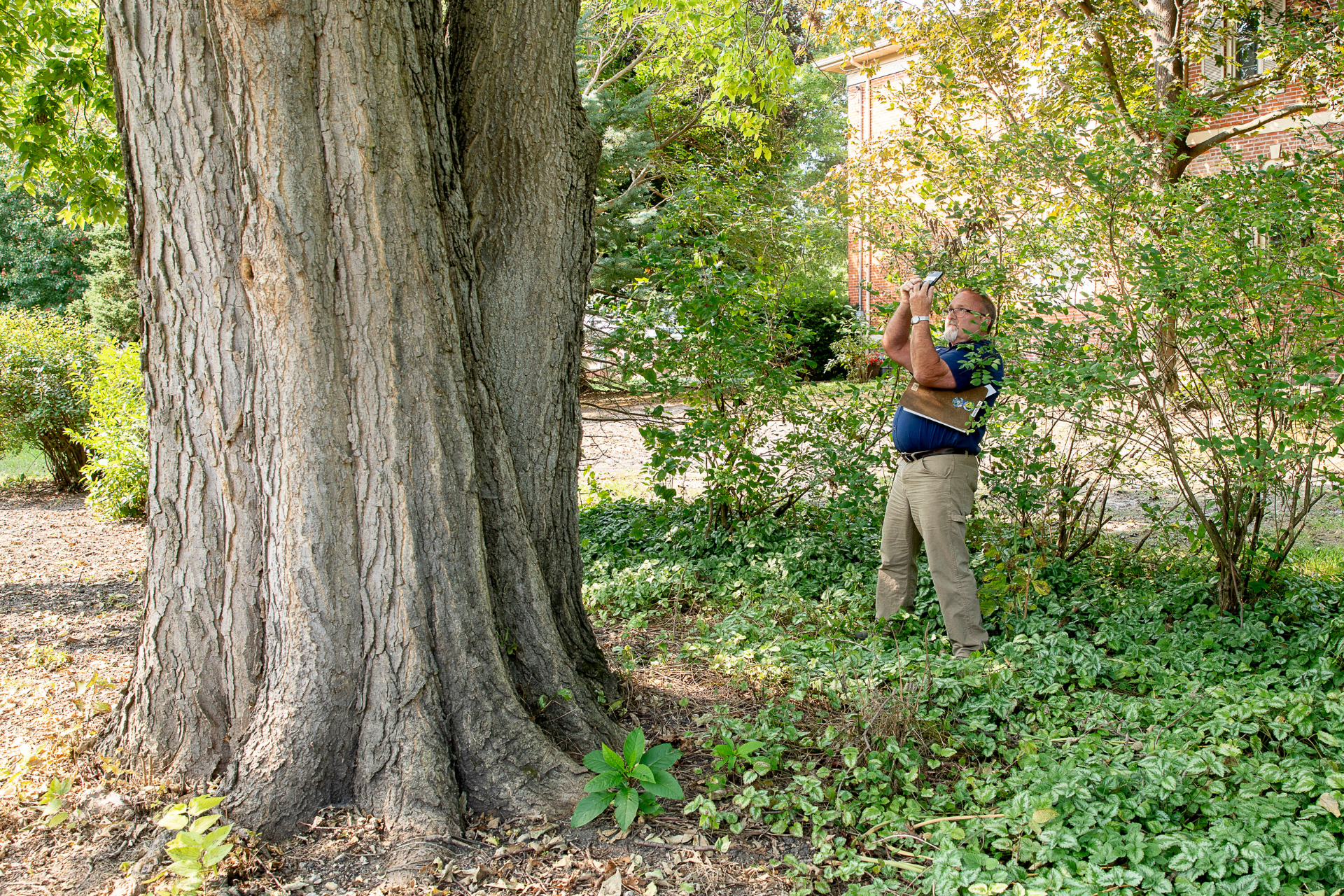
Short Answer: July is the highest-pressure month for ornamental and shade trees on Northern Illinois properties. Three issues do most of the damage: adult Japanese beetles skeletonizing leaves on lindens, roses, and ornamental fruit trees; bagworms eating evergreens like arborvitae, juniper, and spruce while hidden inside camouflaged bags; and a cluster of tree diseases including anthracnose, apple scab, and fire blight that hit when wet spring weather is followed by humid July conditions. Our ISA-certified arborists walk a property in July with all three in mind. Catching any of these in the first two weeks of activity costs a fraction of what waiting costs.
The lawn gets most of the attention in July, and it should, but the trees on a Northern Illinois residential property are usually worth ten or twenty times what the lawn is worth in replacement value alone. A mature shade tree is a thirty-year investment. A row of arborvitae screening the property line is the kind of planting that does not get redone, only replaced when something goes wrong. The trees and ornamentals on most properties get noticed only when something is visibly failing, and by then the easy treatments have already passed.
Our team includes ISA-certified arborists, and the July walk we run on the tree and ornamental side of a property looks at three things first because those three account for most of the damage we see across Bureau, Putnam, LaSalle, and surrounding counties. The good news is that all three are recognizable, all three are treatable, and all three respond well to early intervention. The cost of acting now is small. The cost of waiting until late August is large.
Japanese Beetles on Trees and Ornamentals
Adult Japanese beetles emerge from lawns in late June and early July, mate, feed, and lay eggs over a four to six week period. By mid July they are at peak activity on most Northern Illinois properties. The adults feed on the leaves of more than three hundred plant species, but in our area the heavy hitters are linden, crabapple, ornamental cherry, birch, elm, rose, grape, raspberry, and Norway maple. We also see significant damage on hibiscus, hollyhock, and some hostas.
The damage pattern is distinctive. Adult beetles eat the soft tissue of the leaf between the veins, leaving a lace-like skeleton behind. A mature linden with heavy beetle pressure can look brown from the road within a week of the adults arriving. The tree is rarely killed by the defoliation alone, but stress accumulates. A second consecutive year of heavy feeding on a tree already drought-stressed or struggling with root issues can push it past recovery.
The temptation when homeowners see the damage is to set up beetle traps. Do not. The traps are pheromone-baited and they actually pull more beetles onto your property than would otherwise visit. The pheromone reaches farther than the trap can capture, so beetles arrive, feed, and never enter the trap. Research on beetle traps is consistent on this point. They are a tool for entomologists doing population surveys, not for homeowners protecting plants.
The treatments that actually work fall into three categories. Hand-removal is realistic for small infestations on rose bushes and a few ornamental trees. Beetles are sluggish in the morning. Knock them into a bucket of soapy water and the population drops measurably within a few days. Systemic soil drench with imidacloprid applied in the spring protects the tree through the beetle window, but it cannot be applied during bloom because it harms pollinators. Foliar treatments applied during active beetle feeding work for one to two weeks per application and require more frequent retreatment. Our standard recommendation on high-value lindens and ornamentals is the spring systemic, applied before bloom, which protects the canopy without putting pollinators at risk.
The other half of the Japanese beetle conversation is the larval stage in the lawn, which we addressed in the June grub blog. The two-part strategy of curative beetle management in July plus preventive grub control in late June is what produces consistent results year over year.
Bagworms on Evergreens
Bagworms are the silent killer of arborvitae, juniper, eastern redcedar, and spruce on Northern Illinois properties. A heavy bagworm infestation can defoliate an arborvitae screen in a single season, and unlike deciduous trees, evergreens defoliated to bare wood usually cannot recover. The dead branches stay dead. The replacement cost on a mature arborvitae screen runs into the thousands.
The pest is harder to spot than Japanese beetles because the larvae build camouflage bags out of pieces of the host plant. On an arborvitae, the bags look like miniature versions of the plant’s own foliage clusters. They blend in until the homeowner stops and really looks at the tree. By the time the damage is obvious, the larvae have already done most of their feeding for the year.
The peak vulnerability window in Northern Illinois is mid June through mid July. The young larvae are small, mobile, and exposed enough to be controlled with foliar treatments. Once the larvae mature and seal themselves inside the bag for pupation, treatments become much less effective. The female never leaves the bag, mates inside it, and lays the next year’s eggs inside the bag where they overwinter. A single mature bag can produce hundreds of larvae the following spring.
The diagnostic walk for bagworms is slow and methodical. Stand a few feet back from each evergreen and scan the foliage looking for the bag silhouettes. They are usually one to two inches long, hanging from the foliage by a thin silk strand, and oriented vertically. On a well-camouflaged infestation you may need to gently lift branches and look at the interior foliage. New larvae in early summer create much smaller bags that look like tiny pinecones.
Treatment for active early-instar larvae in July is a foliar application of a targeted insecticide. We typically use a Bacillus thuringiensis product on smaller infestations, which is selective for caterpillar-type larvae and safe for pollinators. Heavier infestations may warrant a conventional foliar treatment for faster knockdown. For mature bags already sealed for pupation, the only practical option is hand-removal through fall and winter. Pull every bag you can reach, drop them in a sealed bag, and dispose of them in household trash rather than yard waste. The eggs inside will hatch wherever the bag ends up, so composting infested bags is worse than not removing them.
Tree Disease Signs to Watch in July
The third category is fungal and bacterial disease on ornamental and shade trees. Three diseases account for the bulk of what we see in July on Northern Illinois properties.
Anthracnose is a fungal disease most common on sycamore, ash, oak, maple, and dogwood. It typically shows up after a cool wet spring is followed by warm humid weather, which is exactly the Northern Illinois pattern in most years. The symptoms appear as brown or black blotches on leaves, often along the veins, with leaves dropping early in summer. On sycamores, anthracnose can also cause shoot dieback that looks like winter damage in the upper canopy. Most healthy mature trees survive anthracnose without intervention, but trees already under stress benefit from a fungicide program the following spring before bud break.
Apple scab is a serious disease of crabapples and apples. Symptoms are olive-green to black spots on leaves, often with a feathery margin, followed by yellowing and early leaf drop. Heavily infected crabapples can drop most of their leaves by August, which weakens the tree and exposes the bark to sunscald. Long-term management requires a fungicide program starting at bud break the following spring. For July, the right move is documenting the severity, raking and removing fallen leaves to reduce the spore load for next year, and planning a spring treatment program. Some crabapple varieties carry genetic resistance to apple scab. Replacement with a resistant cultivar is sometimes the right long-term answer for badly infected ornamental plantings.
Fire blight is a bacterial disease that hits pears, crabapples, hawthorns, and serviceberry. The signature symptom is the shepherd’s crook, where the tip of a branch wilts, curls back, and blackens as if it had been scorched by a torch. Cankers form on the affected branches. Untreated fire blight can kill a young tree in one season and disfigure a mature tree permanently. Pruning out infected branches is the immediate response, with the cut made at least six to eight inches below the visible canker and the pruners disinfected between each cut to avoid spreading the bacteria. Severe cases warrant professional evaluation because the wrong pruning approach can spread the disease faster than leaving it alone.
The Five Tree Stress Signs Worth Watching in July
Beyond the named pests and diseases, the July walk also looks for general stress signs on shade and ornamental trees. Five signs that mean the tree needs attention now rather than in fall.
First, early leaf drop from the interior canopy. Healthy trees drop leaves from the outer canopy in fall. A tree dropping leaves from inside the canopy in mid summer is shedding non-productive growth because it cannot support the full canopy with available water and nutrients. This is often the first sign of root stress.
Second, sap weeping from the trunk. Clear or amber sap on the bark is a common sign of borer activity, mechanical damage, or stress-induced bleeding. The cause matters because the response is different for each, but any visible sap on a trunk in July is worth a professional look.
Third, bark cracks running vertically. Sunscald and frost cracking are different events but produce similar-looking vertical cracks. A new crack on a previously intact trunk is a warning sign for thin-barked species like maple, beech, and young oaks.
Fourth, yellow inner leaves while outer leaves stay green. This is a classic sign of nutrient deficiency, usually iron or manganese, and is most common on river birch, pin oak, and red maple grown in our alkaline soils. The fix is targeted soil treatment in fall.
Fifth, soft soil or visible mushrooms at the base of the trunk. Fungal fruiting bodies on or near the trunk often indicate root rot or trunk decay, which can compromise the structural integrity of the tree. This is one of the few July observations that may warrant urgent professional evaluation for safety reasons, not just tree health.
What Tree Care Actually Costs Compared to Replacement
Homeowners often defer tree care because the cost looks high in the moment. The honest math is the other way. A professional tree disease and pest program for a typical residential property with five to ten significant trees runs in the range of three hundred to seven hundred dollars annually. A single mature shade tree on a Northern Illinois property costs eight to twenty thousand dollars to replace, including removal of the failed tree, stump grinding, replanting with a tree of useful size, and several years of establishment care. The math on prevention is straightforward across almost any time horizon.
For specialty ornamentals like mature crabapples, Japanese maples, and well-shaped arborvitae screens, the replacement cost is even higher because nursery stock of comparable size is either expensive or simply unavailable. Some plantings cannot be recreated at any reasonable cost.
Frequently Asked Questions
Are Japanese beetle traps ever a good idea?
For most residential properties, no. The pheromone in the trap reaches farther than the trap captures, which pulls more beetles to the property than would otherwise visit. The exception is on very large rural properties where a trap can be placed far from the protected plantings and the population can be reduced before adults migrate inward.
Can I treat bagworms myself?
For early-stage larvae in June and early July, yes. Bacillus thuringiensis products are available at most garden centers and work well on small larvae. For mature bags, hand-removal works if the infestation is reachable. Larger infestations on tall evergreens usually warrant professional treatment because reaching the upper canopy with an effective application requires the right equipment.
How do I tell anthracnose from drought stress on my maple?
Anthracnose produces patterned damage following the leaf veins, often with definable spots or blotches. Drought stress produces marginal browning, with the leaf edges turning brown and the interior staying green longer. The two can occur together on a stressed tree. The combined response is increased watering plus a documented plan for spring fungicide if anthracnose is recurrent.
Is my old crabapple worth saving if it has bad apple scab every year?
Depends on the tree. Mature crabapples in good structural condition can be brought back with a two-year fungicide program plus sanitation. Trees that are also showing dieback in the upper canopy or structural defects may be better candidates for replacement with a scab-resistant cultivar. The walk-through tells us which path makes sense.
When is the latest I can address fire blight this year?
Pruning of fire blight should happen during dry weather, which is rare in our wet Junes but common in late summer. July is a workable window if you can hit a stretch of three to four dry days. The pruning must be done correctly with disinfected tools and cuts well below visible cankers.
The Taylor’s Way Tree and Ornamental Walk
Our ISA-certified arborists walk Northern Illinois properties in July looking for exactly the issues described above. The walk takes thirty to forty-five minutes on a typical residential property and produces a written list of what we see, what action is warranted, and what the cost of action versus deferral looks like. We do not treat what does not need treatment. We tell you straight when a tree is past saving and when it is worth investing in. That has been our family’s approach for over fifty years.
What to Do Next
If you would like an ISA-certified arborist to walk your property and identify any active pest, disease, or stress issues this month, call Taylor’s Way at 815-875-8231 or visit taylorsway.com. We serve Princeton, Spring Valley, Peru, Oglesby, LaSalle, and surrounding north-central Illinois communities. July is the right window to catch these issues. Acting now costs far less than waiting until August or September.