
Tree Removal vs Tree Preservation: How to Tell What Your Property Needs
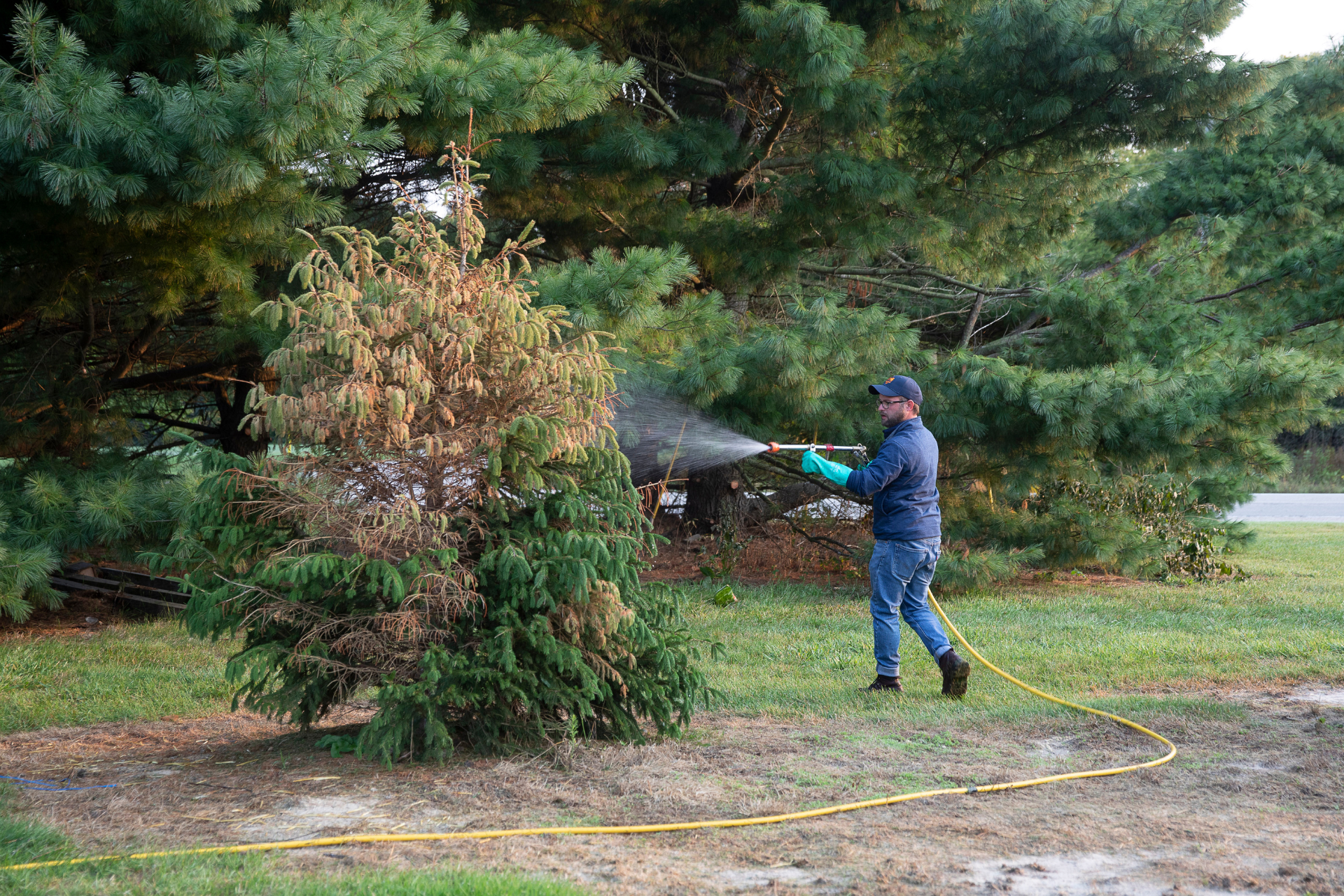
Short Answer: Tree preservation is the right call when the tree is structurally sound, free of major disease, in a location that does not threaten structures, and would be expensive or impossible to replace at similar size. Tree removal is the right call when the tree has major structural defects, advanced disease, dangerous lean toward structures, or is in a location that no longer fits the property. Most decisions are not obvious without a proper inspection. An ISA-Certified Arborist can help you make the right call. Here is how we think about the decision.
Mature trees are valuable. They take decades to grow to size, provide significant property value and curb appeal, support the local ecosystem, and contribute to your home’s character. So the decision to remove a tree should not be taken lightly. At the same time, a damaged or dangerous tree poses real risks that may justify removal even when it hurts to lose it.
Across central Illinois properties, we make this decision regularly with homeowners. Here is the framework we use to help guide the call.
When Preservation Is the Right Call
Preservation is usually the right approach when:
The tree is structurally sound. No major splits, severe lean, included bark, or signs of imminent failure.
The tree is reasonably healthy. Some pest pressure or minor issues are normal and treatable. Major decline is different.
The tree is in an appropriate location. Far enough from structures that storm damage would not threaten the home or other valuable features.
The tree contributes meaningfully to the property. Provides shade, privacy, beauty, or wildlife support.
Replacement at similar size would be expensive or impossible. Mature shade trees take 20 to 40 years to replicate.
Even when a tree has issues, preservation through pruning, treatment, or strategic intervention is often viable. The cost of preservation is usually a fraction of the long-term value.
When Removal Is Appropriate
Removal becomes the right call when one or more of these is true:
Major structural defects. Severe lean (more than 15 degrees), large cracks at the trunk or major branches, significant decay at the base, multiple weak attachments.
Advanced disease that is not treatable. Dutch elm disease, oak wilt in some stages, or extensive root rot can take a tree past the point of recovery.
Dead or dying trees. Once a tree is mostly dead, removal is necessary; the only question is whether it falls before you remove it.
Trees too close to structures. A large tree leaning toward the house with a history of dropping branches presents real risk.
Invasive or inappropriate species. Some species (Bradford pears, certain elms) have structural issues that make them unsuitable in residential settings as they age.
Significant interference with infrastructure. Roots damaging foundations, sewer lines, or hardscape may justify removal when alternative solutions are not viable.
Why Professional Inspection Matters
Tree assessment is not always obvious from the ground or to an untrained eye. ISA-Certified Arborists are trained to identify:
Structural defects that may not be visible from a distance.
Disease symptoms that homeowners often miss or misinterpret.
Decay using sounding hammers or specialized testing equipment.
Risk assessment using standardized methods.
Treatment options that may save the tree.
The certification matters. Not all “tree services” employ qualified arborists. Some are simply removal contractors who recommend removal because that is what they do.
Risk Assessment Framework
Modern arboriculture uses formal risk assessment that considers:
Likelihood of failure. Based on observed defects and tree health.
Likelihood of impact. What is in the failure zone? A house, road, play area, or just open lawn?
Consequences of impact. Property damage, personal injury, business interruption?
Combining these produces a risk rating. Trees with high likelihood of failure plus high consequences of impact are removal candidates. Trees with low risk of failure or low consequences may be preserved with monitoring or intervention.
Treatment Options Before Removal
Several interventions can extend the life of trees that are not yet at the removal threshold:
Pruning. Removing structural defects, dead wood, or competing branches can dramatically improve a tree’s long-term outlook.
Cabling and bracing. Hardware that supports weak attachments and reduces failure risk.
Disease treatment. Fungicides, insecticides, and systemic treatments can address treatable diseases.
Soil management. Addressing compaction, root zone problems, or nutrient deficiencies improves overall tree health.
Lightning protection systems. For valuable specimen trees in exposed locations.
These interventions are often a fraction of the cost of removal plus replacement, and they preserve a mature tree that cannot be replaced at the same size.
What Bad Tree Removal Looks Like
If you have decided removal is necessary, the quality of execution matters. Bad removal includes:
Topping (cutting trees back to stubs) on trees that could have been pruned. Topping is rarely the right answer and usually creates worse problems.
Damaging surrounding plants, lawn, or hardscape during removal.
Improper stump grinding that leaves the area unusable for replanting.
Skipping permits where required by your municipality.
Not having proper insurance, leaving you exposed if something goes wrong.
Quality removal companies do clean work that respects the rest of the property and complies with all regulations.
Replacement Considerations
If you remove a mature tree, what to plant in its place matters:
Species selection should account for mature size, root habits, and suitability for your soil and climate.
Location should provide adequate space for mature growth without future conflicts with structures, utilities, or other landscape elements.
Timing matters. Spring or fall installation gives new trees the best establishment chances.
Initial care is critical. New trees need consistent watering for the first 1 to 2 years to develop their root systems.
Replacing a mature shade tree with a single sapling produces a 20 to 30 year recovery period before the canopy is restored. Plan accordingly.
Insurance and Liability
Trees that fall and damage property or injure people create insurance claims. Maintaining trees properly and removing dangerous ones reduces liability:
If a clearly-defective tree falls and damages a neighbor’s property, you may be liable.
If a tree shows signs of advanced decay and you ignore it, your insurance may dispute claims for damage when it falls.
Documenting tree assessment work creates a paper trail that protects you.
Annual or biannual inspection of large trees is reasonable preventive practice for most properties.
What to Do Next
If you have trees on your property and you are not sure whether they need work, removal, or just monitoring, we are glad to come do a tree health and risk assessment. Our ISA-Certified Arborist will walk the property, evaluate each significant tree, and tell you honestly what we recommend. Sometimes the answer is preservation. Sometimes it is removal. Often it is somewhere in between. Reach out anytime to schedule.