Pest Control
What a Fall Pest Treatment Covers, and What It Cannot Fix
Taylor's Way • October 2026 • Princeton, IL • 7 min read
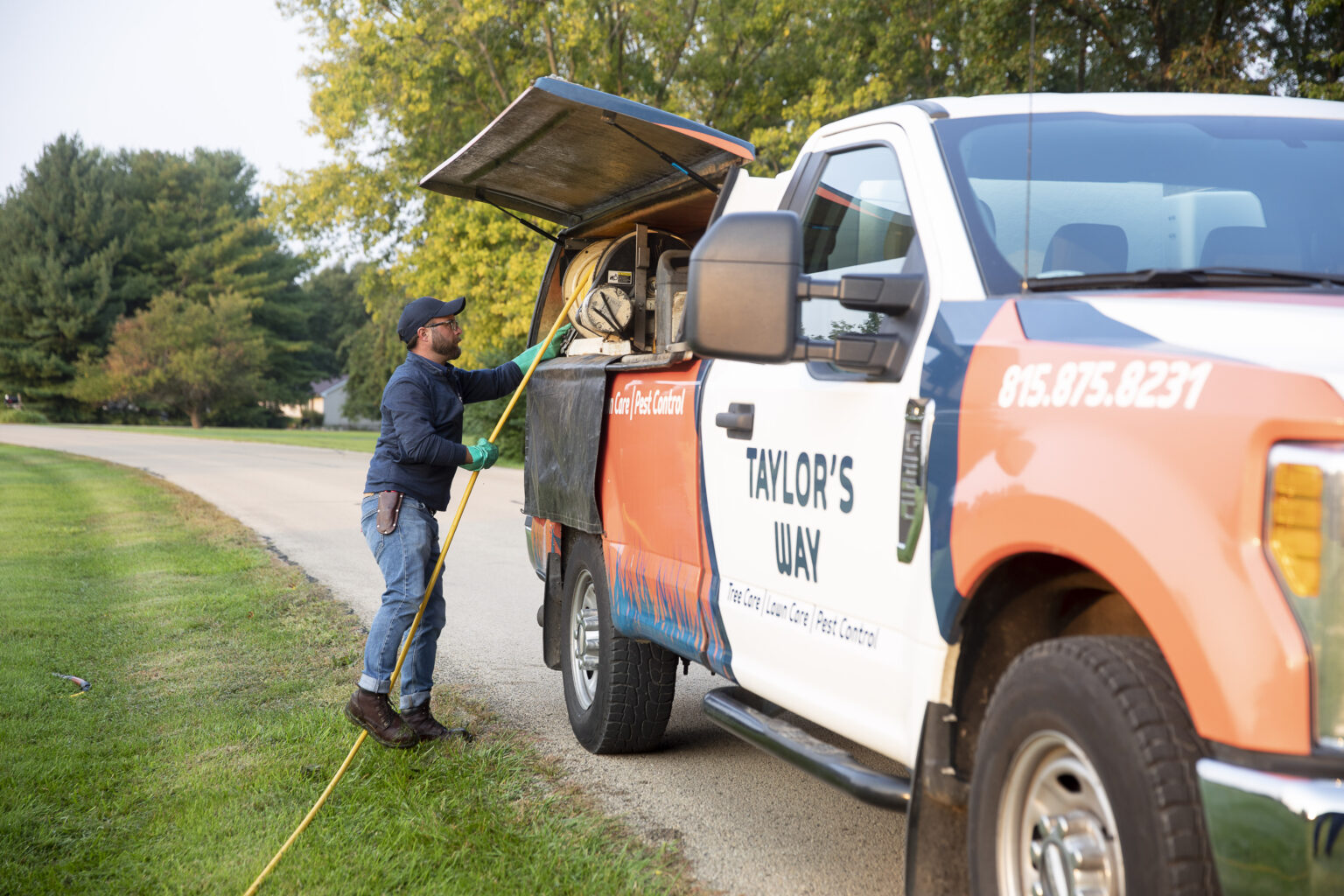
Short Answer: A fall exterior service treats the building envelope, meaning the foundation band, entry points where utilities pass through walls, door and garage thresholds, window frames, and the eaves and soffits where cluster flies and lady beetles get into attic spaces. What it cannot do is remove an established rodent population, reach insects already sealed in a wall void, or substitute for closing the gaps they used. Those need trapping, sealing, or in some cases a different trade.
Pest control gets described in general terms on most websites, which leaves homeowners guessing about what a visit actually includes. That guessing is where disappointment comes from, so here is the specific version for a fall service on a north central Illinois home.
We will cover what gets treated, what genuinely helps, and the several things a treatment does not fix, because knowing the second list is more useful than knowing the first.
The Exterior Is the Right Place to Work
Nearly everything that ends up inside a Princeton home came from outside and crossed the envelope to get there. Intervening at the envelope addresses the problem earlier and keeps treatment out of your living space.
A proper exterior service starts with a treated band along the foundation, covering the wall itself and a strip of ground next to it. That is the route most crawling pests take and it is the minimum anyone means by a perimeter treatment.
From there the work follows the actual entry points rather than just circling the house. Utility penetrations, where pipes and cables and vents pass through, get specific attention because those gaps are the doors.
Door thresholds and the garage opening matter, since a garage is effectively a large opening that gets used several times a day.
Window frames and the seams where different materials meet round it out, and on older homes around here settling has usually opened a few of those.
Eaves and Soffits Matter More Here Than Most Places
This is the part most commonly skipped and it is the part that addresses the insects Illinois homeowners complain about most.
Cluster flies and Asian lady beetles reach attic and wall voids through gaps at the roofline rather than at ground level. A service that treats only the foundation does essentially nothing about them.
Boxelder bugs work into siding and window gaps on sunny walls, which means the upper portion of a south or west elevation is where they are staging.
Spiders build where flying insects gather, which is under overhangs and near lights, so webbing accumulates at the eave line. Knocking it down physically is part of the work rather than a cosmetic extra, and it gives you a read on the next visit, since fresh webbing means continued activity.
Wasps build in the same protected overhangs and under decks, and those are far easier to address before they are established.
Conducive Conditions Are Part of the Job
Products do part of the work and conditions do the rest, and a technician should be paying attention to both.
Mulch piled against the foundation, shrubs touching siding, firewood stacked against the wall, and leaf litter along the foundation line all create sheltered routes leading straight to the house. They hold moisture, block airflow, and give pests cover.
Pulling mulch back a few inches and trimming shrubs off the siding reduces pressure meaningfully and costs nothing but an afternoon.
Moisture is the companion issue. Downspouts discharging at the foundation, gutters backing up, and low spots holding water create the damp conditions that draw pests, and in fall around here gutters fill quickly once the leaves come down.
Stored feed, birdseed, pet food, and grass seed in a garage or outbuilding are the specific attractants that keep rodents interested, and moving those into sealed containers does more than any product will.
What a Treatment Cannot Do
This is the honest list and it is the reason to read this far.
It cannot remove an established rodent population. Mice are not treated out of a structure. They require monitoring to establish what is present and where, trapping or removal, and closing the entry point. Anyone proposing to solve a mouse problem with a perimeter spray is not describing a solution.
It cannot reach insects already sealed into a wall void. Boxelder bugs and lady beetles that got in during September and October are inside the structure, and there is very little to be done about them until they emerge on warm days in late winter.
It cannot substitute for sealing. Treatment reduces pressure at entry points and sealing removes them, and only one of those lasts past the season.
And it does not fix the conditions that created the problem. A gutter dumping at the foundation, a failed garage seal, or feed stored in an open bag will keep producing pressure regardless of what is applied.
What Falls Outside a General Service
Worth naming so nobody assumes something is covered when it is not.
Termites are almost always a separate service with different inspection, different products, and frequently a separate agreement.
Wildlife, meaning squirrels, raccoons, and bats, is a different discipline requiring exclusion work and often different licensing. A squirrel in an attic is not a pest control call in the usual sense.
Bed bugs are specialized and separate essentially everywhere.
Bats in particular have protections and seasonal restrictions on exclusion work in many places, so that is a conversation with someone who handles it specifically rather than something to fold into a general visit.
None of these being excluded is a problem. Not knowing they are excluded is where the frustration comes from.
What Interior Service Actually Looks Like
Interior work is targeted rather than broadcast, and it looks nothing like the fogging people picture.
Pests travel along edges and harbor in dark undisturbed spaces, so the work happens under sinks where plumbing penetrates the wall, behind and beneath appliances, around water heaters, along baseboards in rooms with activity, and inside cabinet voids.
Garages, utility rooms, and basements get particular attention because they stay undisturbed and connect most directly to the outdoors.
Monitoring devices answer questions treatment cannot, namely whether something is present, what it is, and where it travels.
For most households interior service is occasional rather than routine, and a company recommending it on every visit by default is worth a question.
Frequency Through an Illinois Year
How often a property needs service varies more here than in a mild climate, because our seasons differ so sharply.
Fall is the most important single service of the year, because it intercepts the migration indoors while pests are still outside and crossing treated surfaces. Skipping fall and treating in December means working on an interior problem instead.
Spring matters nearly as much, catching ants, wasps starting nests, and the overwintered insects emerging from voids. Those two visits cover the transitions that generate most calls around here.
Summer covers general pressure and is the most optional of the three for a property without a specific issue. Winter is genuinely quiet outdoors, and service during it is usually reactive rather than scheduled.
A property bordering fields, woods, or a creek gets more continuous pressure than one surrounded by other houses, and that difference matters more than the number of visits on a plan.
What to Do Next
Walk your foundation and garage with a flashlight and note every gap you can slide a pencil into. That list is the exclusion work, and it is the part that keeps paying off after the season.
Look up at your eaves for webbing and at your sunny walls for clustering insects. Both tell you whether the upper envelope is being addressed.
Pull mulch back from the foundation, trim shrubs off the siding, move firewood away from the house, and get feed and birdseed into sealed containers.
When you talk to any company, ask whether eaves and soffits are included, whether sealing is part of the service or a separate recommendation, and what specifically is excluded.
To get the exterior handled before the cold sets in, call Taylor's Way at 815-875-8231 or visit taylorsway.com. We are a family owned business that has served Princeton and the surrounding area for over 50 years, and we will tell you plainly when something needs sealing rather than spraying.