Lawn Tree and Pest
Fall Overseeding for North-Central Illinois Lawns
Taylor's Way • September 2026 • Princeton, IL • 8 min read
Short Answer: September is the best month of the year to add seed to a north-central Illinois lawn. Soil is still warm enough for fast germination while air temperatures are falling, and new grass gets seven or eight months of root development before it meets a Illinois summer. Aerate first so seed reaches actual soil rather than sitting on thatch, use a quality seed at four to six pounds per thousand square feet, and then keep the surface consistently damp for two to three weeks. That watering discipline decides the outcome more than anything else you buy.
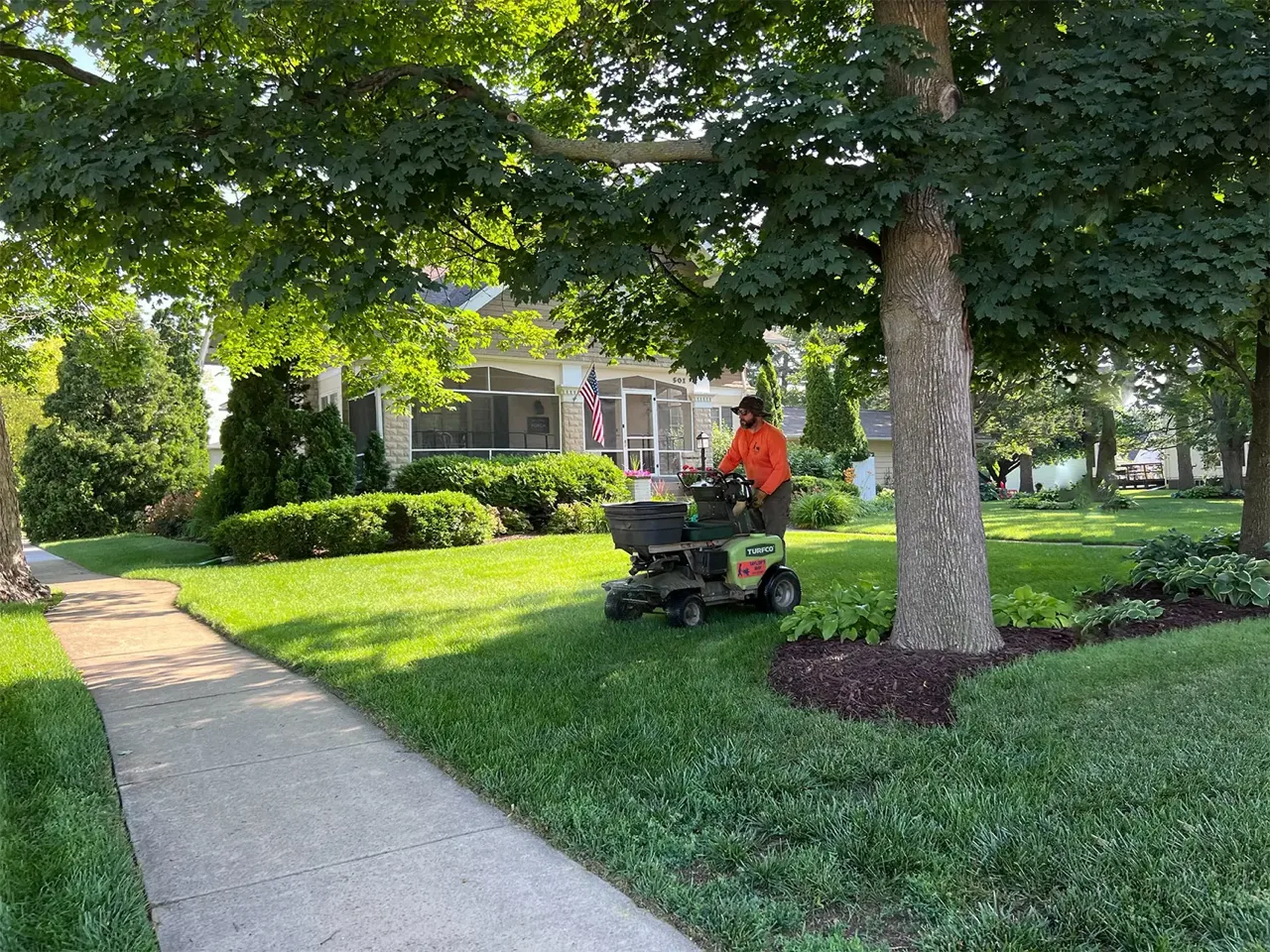
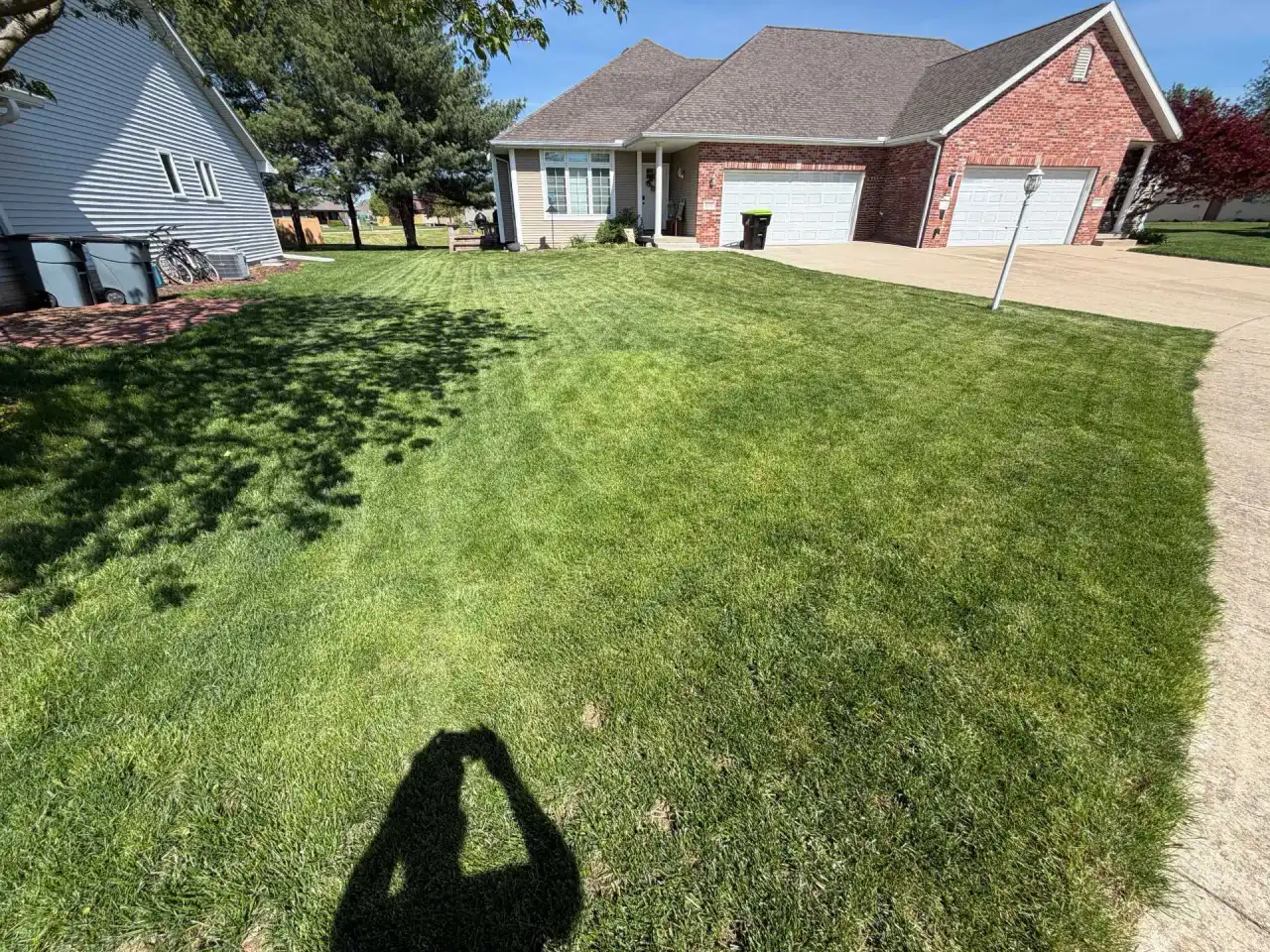
We have been putting seed into lawns around Princeton and Bureau County for more than fifty years, and the pattern has not changed. The lawns that look thick and even next June are the ones that got seeded properly in the next few weeks, and the ones that look thin are the ones where somebody meant to and did not.
If you read our July piece about planning fall renovation, this is the follow through. Here is how to actually do it.
Why This Window and No Other
Two conditions have to line up, and in north-central Illinois they overlap for about five or six weeks.
Soil has to be warm. Cool season grasses germinate well when soil temperatures sit in the 60s and low 70s, and our soil is still holding summer warmth in September, so seed comes up in one to three weeks rather than sitting there.
Air has to be cooling. New seedlings have almost no root system and cannot handle heat stress. September and October give them mild days, cool nights, and usually better moisture than August.
Spring looks like it offers the same thing and does not. Soil in April is cold, germination is slow, and by the time seedlings are established it is June with our summer coming. It is also crabgrass germination season, and you cannot apply crabgrass pre-emergent over new seed. Spring seeding in this region is mostly a way to spend the money twice.
Aerate First
Seed that lands on thatch usually does not become grass. It needs contact with real soil, and around here it usually needs help getting there.
A great deal of north-central Illinois sits on heavy soil that compacts readily, and most subdivision lawns were established over ground that was graded and driven on during construction. Core aeration pulls thousands of small plugs out, and each hole is a protected pocket of open soil that holds moisture and has no competition.
Seed dropped into aeration holes germinates at a far higher rate than seed broadcast across an unaerated lawn. Doing both in the same visit, aeration then seed, is the single biggest lever available.
Leave the cores where they fall. They look untidy for a couple of weeks and then rain and mowing break them down, returning that soil and its biology to the surface where it helps decompose thatch.
Seed Selection Matters More Than People Think
This is where a cheap job is cheap, and the difference does not show up until year two or three.
Most lawns in our area are a mix of Kentucky bluegrass and turf type tall fescue, sometimes with perennial ryegrass. Each does something different. Bluegrass spreads by rhizomes, so it repairs itself, but it is slower to germinate and needs more water. Tall fescue is more drought and heat tolerant and establishes faster, but it does not spread. Perennial ryegrass germinates very quickly, which makes it useful in a mix for early cover, but it does not spread either.
What matters is buying named, tested cultivars rather than generic bulk seed. Read the tag. It lists other crop seed, inert matter, and weed seed as percentages, and a cheap bag with a small percentage of weed seed is broadcasting weeds across your entire lawn on purpose.
Rate matters as much as quality. Overseeding an existing lawn generally calls for four to six pounds per thousand square feet. A light rate spread across a whole lawn produces a uniformly disappointing result. If budget is limited, seed a smaller area properly rather than the whole yard thinly.
The Part That Decides It
More overseeding fails for this reason than any other, and it is entirely within your control.
Established grass wants deep, infrequent watering to drive roots down. New seed wants the opposite. Until it germinates, the top half inch of soil has to stay damp, which in practice means light watering once or twice a day for the first two to three weeks.
If that seed dries out for a single warm afternoon after it has started to sprout, it dies, and no amount of watering afterward brings it back. This is the step where good intentions fail, usually around day nine when life gets busy.
Once seedlings are up and growing, shift gradually toward less frequent and deeper watering to push roots down before the ground freezes.
We ask homeowners to commit to this before we seed. If nobody will be home to water for the next three weeks, we would genuinely rather reschedule than take the money and watch it fail.
What Else Belongs in the Same Visit
Fall fertilization pairs naturally with seeding, and it is doing a different job than a spring feeding. Cool season grass moves energy into roots and stored carbohydrates in autumn, so feeding now builds the root system that carries the lawn through next summer rather than pushing soft top growth.
A soil test is worth doing at least once, particularly if the lawn has resisted normal care. It answers questions that guessing cannot, and lime or specific amendments work slowly enough that autumn is the right time to start.
One caution that catches people every year: do not apply a standard pre-emergent to an area you are seeding. It prevents grass seed from establishing just as effectively as it prevents weeds. If you need both on the same property, the two need planning around each other.
Overseeding or Renovation?
These get confused and they are not the same purchase, so it is worth being clear before you spend anything.
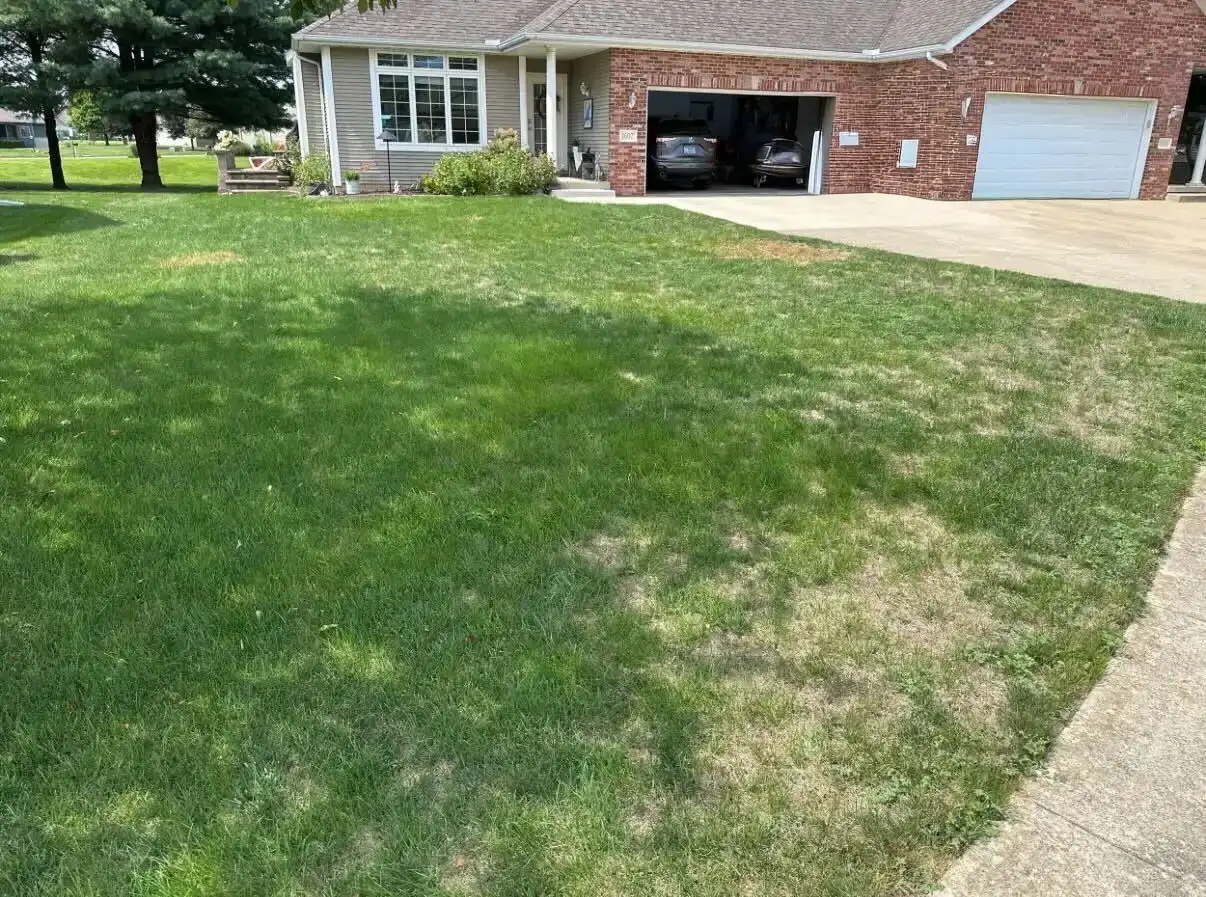
Overseeding adds new plants into a lawn that still has a reasonable stand of grass. It is right when the lawn is thin but the bones are there, which usually means roughly half decent coverage or better, and when weed pressure is manageable.
Renovation is for a lawn that is more weeds and bare ground than grass. It means killing off what is there, dealing with the debris, preparing the soil properly, and establishing a new lawn. It costs several times what overseeding does, and occasionally it is the honest answer.
The distinction matters financially. Overseeding a lawn that genuinely needs renovation means paying for seed that gets outcompeted by the existing weeds within a season. We would rather tell you the harder answer in September than take the easier job and have you disappointed next June.
A rough test: stand and look straight down at several spots. If more than about half of what you see is weeds or bare soil, seed alone will not fix it.
What the First Six Weeks Look Like
Knowing the sequence prevents the worried phone call in week two.
For seven to ten days, nothing visible happens. The lawn looks the same plus cores drying on the surface. That is normal.
Between days ten and twenty-one you see a fine green haze, much lighter and thinner than the established grass. New seedlings look nothing like a lawn yet.
By week four or five they thicken and darken and you can mow. Wait until the new grass reaches about three and a half inches, use a sharp blade, and take off no more than a third. A dull blade tears seedlings out of the ground rather than cutting them.
Germination is uneven, which is also normal. Seed that landed in an aeration hole comes up before seed that landed on thatch. Judge the result at week six, not week two.
What to Do Next
Look at your lawn honestly this week. If you can see soil through the grass looking straight down, it needs seed. Push a screwdriver into moist ground: if it stops in the first couple of inches, aerate before seeding.
Then answer the watering question truthfully, because it determines when to start more than anything else.
If you would rather have someone handle the aeration, the seed selection, the timing, and the fall feeding, that is what we do. Taylor's Way has served Princeton, Bureau County, and north-central Illinois for over fifty years with lawn, tree, and pest care. Call 815-875-8231 or visit taylorsway.com.
Here is what to expect. We will tell you whether your lawn needs overseeding or a full renovation, because those are different jobs at different prices. We will name the seed we intend to use rather than saying "grass seed". And we will give you the watering plan in writing, because that is the part that decides whether any of the rest was worth doing.